


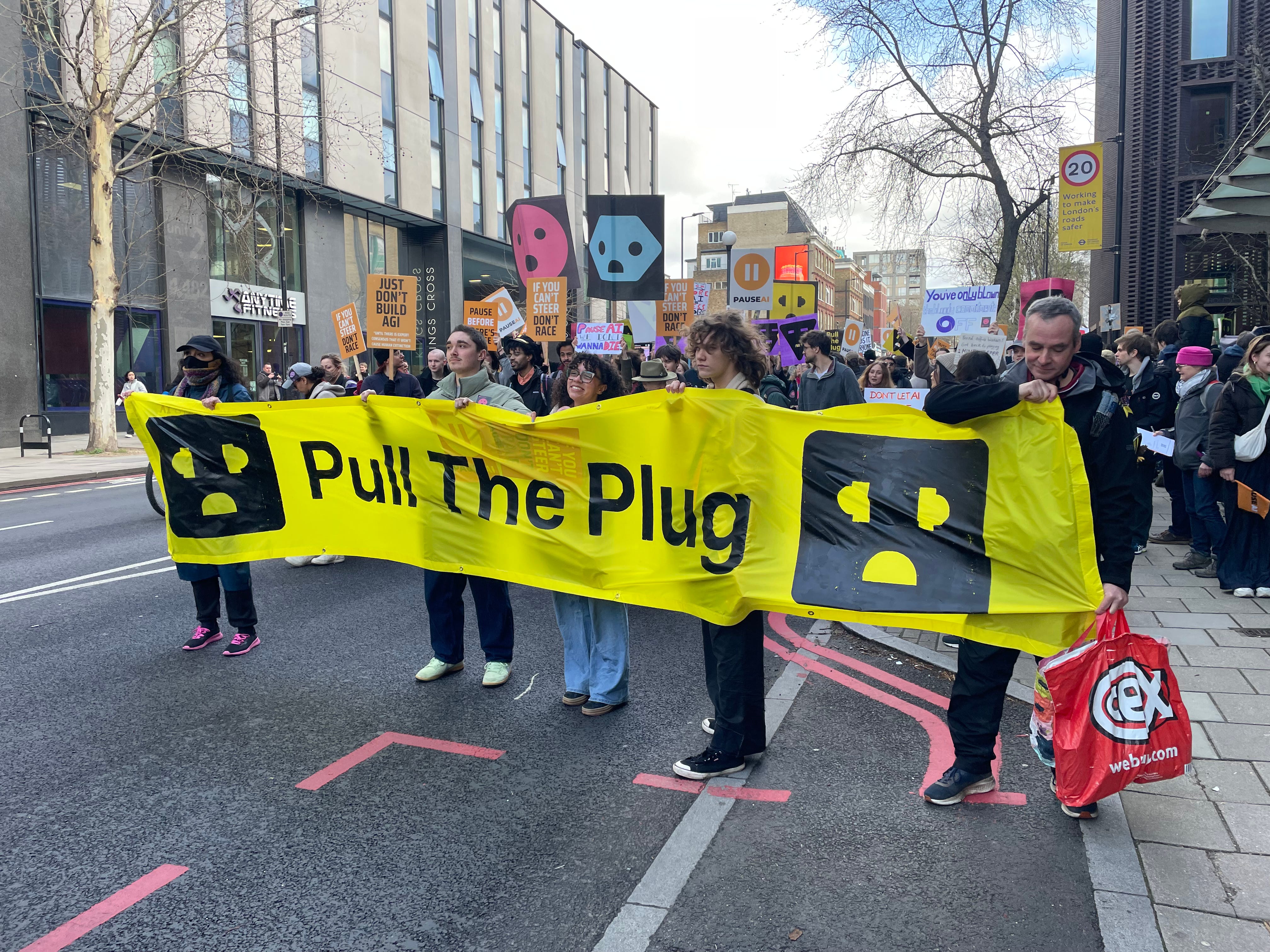
In what organisers are calling a historic stand against the rise of unaccountable artificial intelligence, worried Brits took to the streets of London this weekend in the UK’s first ever anti-AI protest march with cries of “PAUSE AI” ringing through King’s Cross.
Dubbed the March Against the Machines, the demonstration organised by campaign groups Pull the Plug and Pause AI began with angry crowds gathering outside the UK office of OpenAI on Pentonville Road, the controversial American AI giant behind ChatGPT and other generative technologies.
What started as a spirited rally quickly turned into a broader tour of Big Tech HQs around the capital from OpenAI’s London base to nearby offices of other AI developers as campaigners demanded a fundamental rethink of the high-speed rollout of AI.
One march organiser announced to the crowd that what we are experiencing with AI is not “progress”, rather “reckless” and demanded governments and corporations hit the pause button. Such recklessness is apparently recognised even within the AI industry, with one safety leader from AI firm Anthropic recently quitting their job claiming “the world is in peril”.
Millions of jobs at risk
Many of the demonstrators—ordinary people with jobs exposed to the ravages of AI—made their feelings abundantly clear: they believe that AI is not the future of British prosperity, but a scourge that could plunge the country into unemployment chaos.
One placard, held aloft near the OpenAI office, read simply: “Don’t let AI decide your future”, a sentiment that clearly resonated with marchers. Recent research shows that a majority of UK adults fear AI will increase unemployment, with many worrying that their own roles could be automated in the next decade.
This anxiety—stoked by stories of layoffs in tech and beyond—has helped fuel a movement that believes AI could hollow out whole industries unless it is properly regulated. Protesters accused tech bosses of prioritising profits and shareholder payouts over the livelihoods of ordinary workers.
Democracy on the line
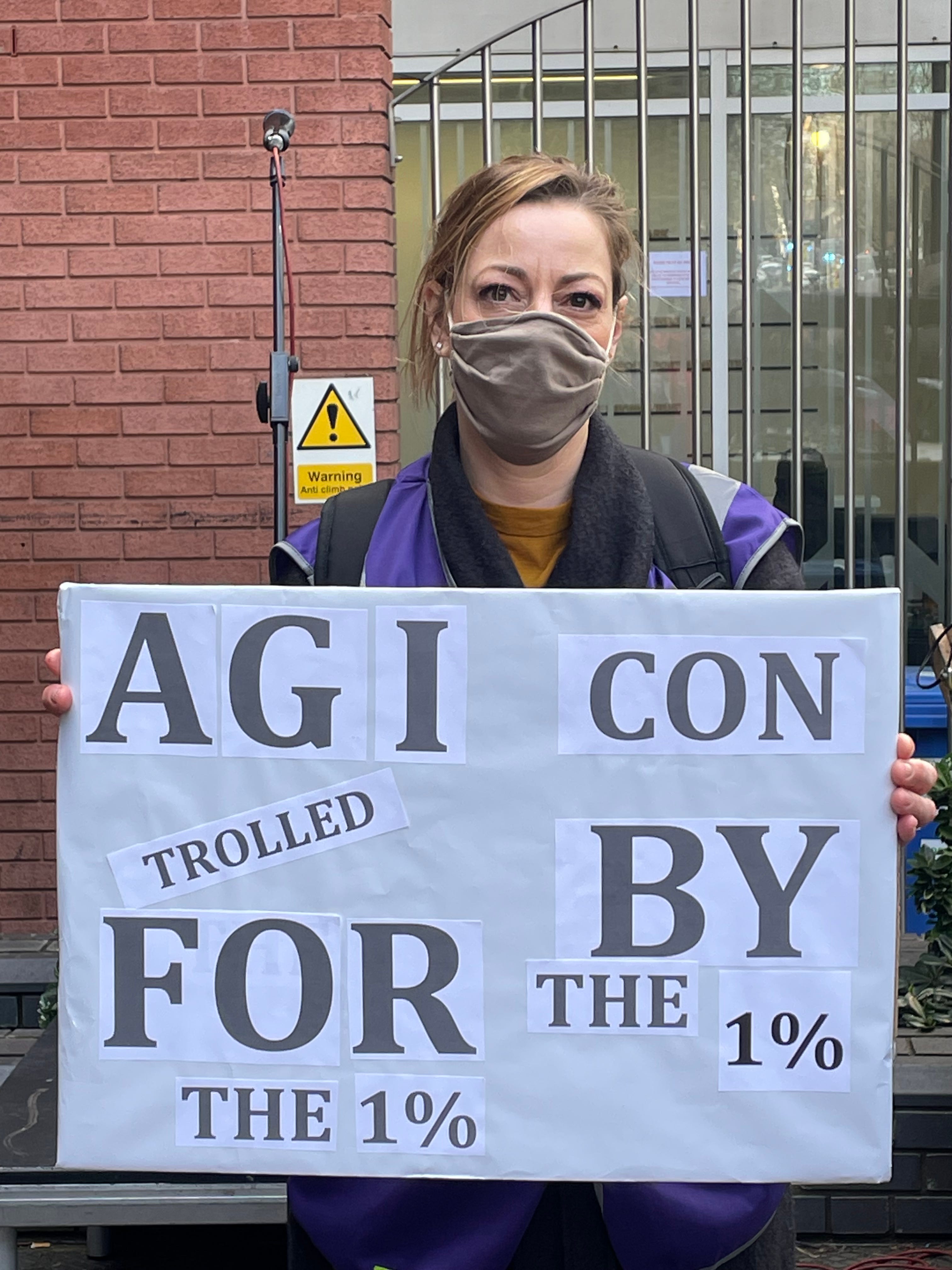
But it wasn’t just jobs that had demonstrators fuming: many voiced deep unease about the role AI could play in undermining democratic processes, not to mention contribute to a surveillance state and unaccountable autonomous warfare.
With social media platforms increasingly awash with AI-generated content, fake videos and algorithm-driven political messaging, critics argue that these tools are already being used to distort public debate and manipulate elections. A recent UK study found that a large portion of Brits are worried AI could be used to sway voters and push propaganda. Another study shows how AI increases misinformation, which makes crisis events even worse than they already are.
The Pull the Plug campaign insists that “ordinary people should have a real say in how AI is used in our lives”: a clear jab at the current dominance of Silicon Valley corporations in shaping the future of this transformative technology.
What happens next?
The march was peaceful and legal, but the message was unmistakable: Brits are fed up with rapid AI rollout, rising uncertainty, and what they see as a lack of meaningful public input.
Whether this march marks the beginning of a broader UK backlash against AI remains to be seen. But Britain’s first anti-AI protest certainly made one thing clear: there’s a growing public line in the sand between supposed innovation and the wellbeing and dignity of ordinary people.