


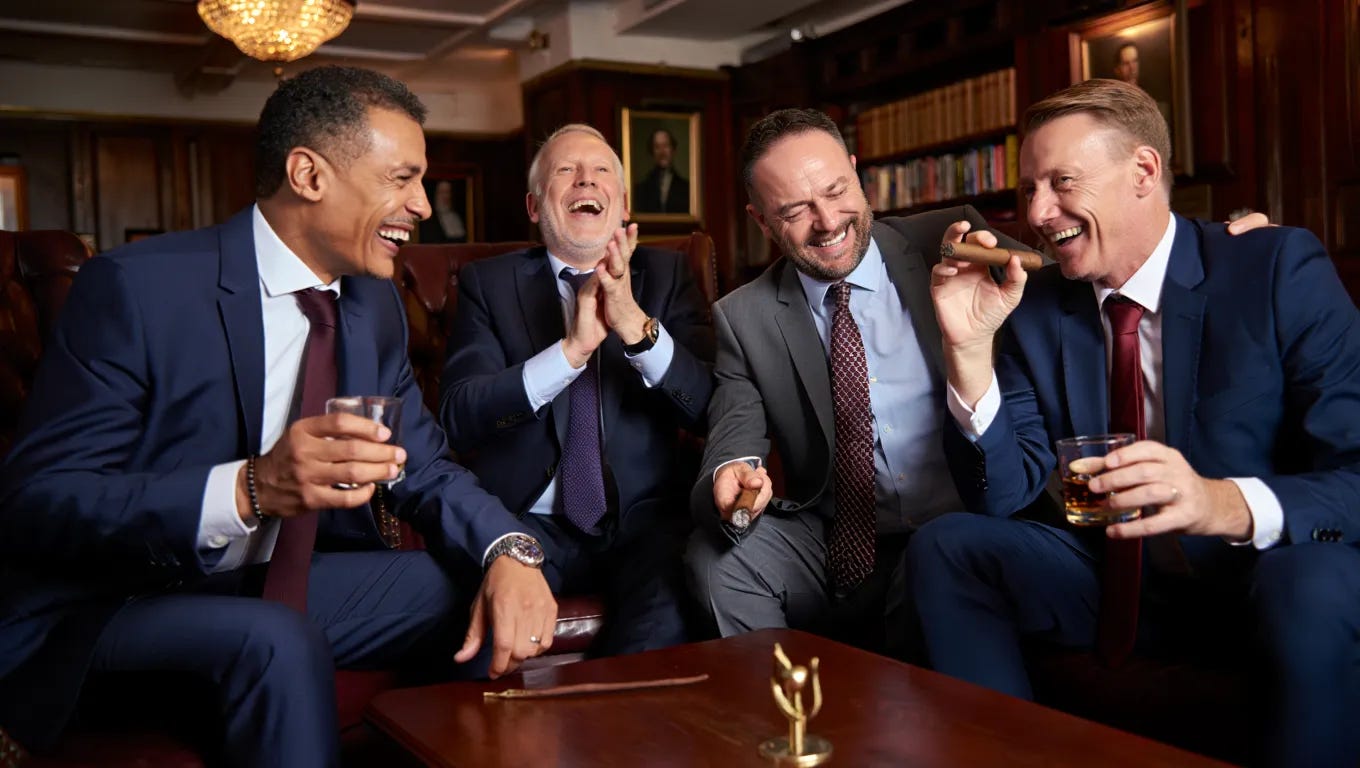
It is the statistic that should send a chill through every oak-panelled office in Westminster: a whopping 81% of people believe that it is true or probably true that “elites follow a different set of rules to the rest of us”.
Pause on that for a moment. More than four in five Britons are convinced that those at the top live by standards entirely separate from the public they govern.
This is not the grumbling of a few hardened cynics down the pub. It is the settled view of the nation.
A crisis in confidence
New data from More in Common lays bare a crisis of confidence that has been years in the making. From the financial crash to expenses scandals, from lockdown-breaking gatherings to the endless spectacle of powerful figures lawyering up and riding out the storm, the pattern has been impossible to ignore.
It is little wonder that an overwhelming 82% of people believe “elites protect other wealthy or powerful people from being held to account”.
Time and again, the public have watched as investigations drag on, as inquiries conclude with words but few consequences, and as the well-connected seem cushioned from the full force of the law. The sordid fallout from the Epstein Files has only deepened this suspicion. Ordinary people see the names, the associations, the extraordinary access—and they cannot help but ask who really answers for what.
This is not about indulging wild conspiracy theories. It is about accountability.
Political careerism
When 74% of people believe “politicians just want power for the sake of it rather than to help people”, it tells you something profound about the mood of the country. Voters no longer see public service; they see careerism. They see leaders obsessing over positioning and point-scoring while real-world problems—crime, living costs, strained public services—bite ever harder.
Perhaps most damning of all, 69% of people believe “people in power do not take crimes committed against ordinary people seriously”. That figure speaks to a raw sense of vulnerability. It reflects communities who feel ignored when antisocial behaviour spirals, when victims wait months for justice, when promises of “zero tolerance” evaporate after the press conference lights dim.
But IS it a conspiracy?
Even when asked the most conspiratorially phrased question, nearly half the country— 49%—believe “a secret group of people is responsible for making all major world decisions, such as going to war”.
That should alarm anyone who cares about democratic stability. Not because Britain is run by some clandestine puppet-masters (probably), but because faith in openness has eroded so badly that such ideas can take root among millions.
It’s not about Left and Right—it’s about fairness
And here is the crucial point: this is not about Left versus Right.
This scepticism stretches across Brexit divides, across Red Wall towns and southern suburbs, across age groups and income brackets. It is the common language of a country that feels the rules are unevenly applied.
The British public are not calling for chaos. They are calling for fairness. They want a future in which wealth and status do not shield wrongdoing, where politicians rediscover humility, and where justice feels visible and real.
Ignore that message, and the gulf between rulers and ruled will only widen. Listen to it, and there is still time to rebuild trust—not through slogans, but through equal rules, equal accountability, and equal respect for the people who ultimately hold the power.