


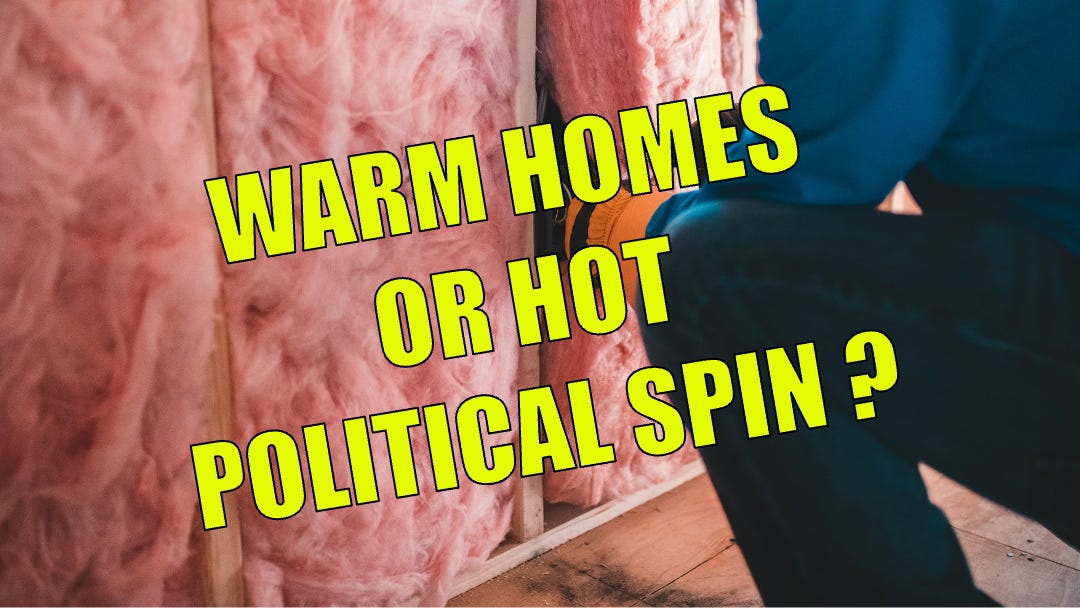
In Westminster’s grand corridors of power, ministers love nothing more than unveiling eye-watering sums and grandiose plans to tackle Britain’s household energy woes. The latest headline-grabbing pledge—the £15 billion Warm Homes Plan—promises to revolutionise our draughty homes, slash energy bills and rescue millions from fuel poverty.
But as ever, sceptics are whispering: will ordinary people see real results, or is this just more political theatre?
A landmark plan
Energy Secretary Ed Miliband has hailed the initiative as the biggest public investment in home upgrades in British history—a “landmark plan” to cut bills, create jobs and tackle the climate crisis by installing heat pumps, solar panels and batteries in up to five million homes by 2030.
Grants and low-interest loans are reportedly on the table, with the government claiming households could save hundreds of pounds a year on energy bills once the measures are installed.
But talk is cheap, and Britain’s track record on home insulation and green technology is patchy at best. Under the previous government, the Energy Company Obligation (ECO) scheme—meant to insulate cold homes and cut bills—ended in disarray, with tens of thousands of installations botched, leaving mould, damp and serious safety defects. MPs have even called for a Serious Fraud Office investigation into the sector amid claims of poor oversight and shoddy workmanship.
Cracks in the pipes
Critics point out that the new plan’s heavy emphasis on solar panels, batteries and heat pumps might be less about fixing leaky homes and more about ticking green credentials. Even the technology at the heart of the plan is contentious.
While heat pumps may be better for the environment, recent surveys suggest many heat pump owners are finding them more expensive to run than old-fashioned gas boilers—despite government assurances—raising the question of whether the touted savings will materialise for everyday households.
And there’s the perennial problem of bureaucracy and confusion. Independent trusts warn that most homeowners simply don’t understand low-carbon technologies or how to navigate complex government funding schemes, meaning uptake could remain stubbornly low without clear, accessible support.
Meanwhile, changes to eligibility—such as scaling back subsidies for many households unless they are on specific benefits—have already sparked concern among industry insiders that well-intentioned targets could be undercut by real-world policy tweaks.
The jury is out
So what’s the verdict? It goes without saying that we need cheaper energy bills, warmer homes and cleaner technology. But for now, the Warm Homes Plan seems to be all promise and models, with plenty of political spin but serious questions about delivery, oversight and value for money.
Ordinary homeowners—especially renters and those struggling to keep the heat on—remain unconvinced that sweeping pledges will translate into tangible benefits.
The government can talk about 5 million homes, net-zero glory and a greener future, but if past performance is anything to go by, millions of Brits could end up still struggling with cold walls and soaring bills.
Big talk? Yes. Action? The jury is very much still out.