


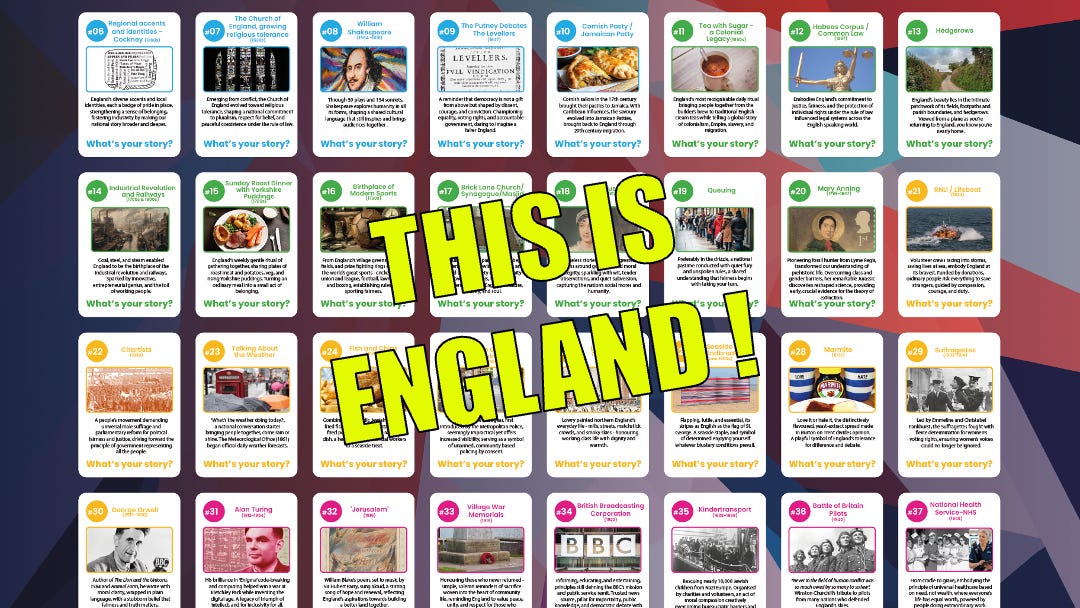
Tea towels, seaside windbreaks, a Greggs sausage roll. A London black cab, Nelson’s coat and the Magna Carta. These are some of the everyday treasures that have made the cut in a nationwide campaign to reclaim St George’s Day from the shouters and the dividers.
A Very English Chat has asked the English public a simple question: what five objects tell the story of your England? More than 3,000 suggestions later, the answers have been stitched together into a “pocket museum” called The Story of England 2026 in 50 Objects, launching today.
And it turns out that when you actually ask people, you get a very different picture from the one served up by the usual culture warriors.
What’s in the pocket museum?
Marmite made the list. So did the Pearly King’s jacket, the Windrush suitcase, Shakespeare and the humble pie and mash shop plate. Up and down the country, towns and cities have their own local line-ups: Newcastle Brown Ale and the Angel of the North in the Toon, Henderson’s Relish in Sheffield, Yorkshire Tea and the flat cap in God’s own county.
The message is clear. England is not a slogan. It’s a mosaic made up of millions of small, ordinary things that ordinary people actually love.
The campaign, backed by the Jo Cox Foundation’s More in Common Network, has pulled together a genuinely broad coalition, from former Conservative Minister Sir Sajid Javid to folk hero Billy Bragg and environmental campaigner Caroline Lucas. You won’t often see that line-up in a photograph. And that’s the whole point.
Sir Sajid said: “St George’s Day is a great day to celebrate what we all have in common. When people talk about what they value, what they trust, and what they share, it becomes easier to build understanding. I’m glad my suggestions of the local bobby and war memorials made the final cut.”
Billy Bragg struck a similar note, saying St George’s Day “should be a day for celebrating the positive things we have in common. A day for recognising the sense of community that comes from the identity and values that we share in this place called England. Through listening to each other, we can find that common ground from which to resist hateful division.”
Caroline Lucas added: “With the UK more divided than ever, by bringing individuals and communities together to share their own reflections on national identity, we can discover far more compelling and inclusive stories of who we are and who we can be.”
Why it matters
For too long the national conversation has been hijacked. On one side, flag-waving finger-pointers telling you who doesn’t belong. On the other, lecturers telling you that loving your country is a bit embarrassing. No wonder so many of us have switched off.
But the truth is most of us agree on far more than we disagree on. We want a country where our kids can breathe clean air, drink clean water and grow up healthy. We want fair wages, decent homes and streets that feel safe. We want to look out for our neighbours. None of that belongs to the left or the right. It belongs to all of us.
That is the England worth celebrating. Not the one carved up by politicians and pundits who profit from keeping us at each other’s throats, but the one you see every day at the bus stop, the school gates, the corner shop and the seaside.
So this St George’s Day, grab five objects. Sit down with a friend, a neighbour, a stranger. Have a very English chat. You might be surprised how much common ground you find.