


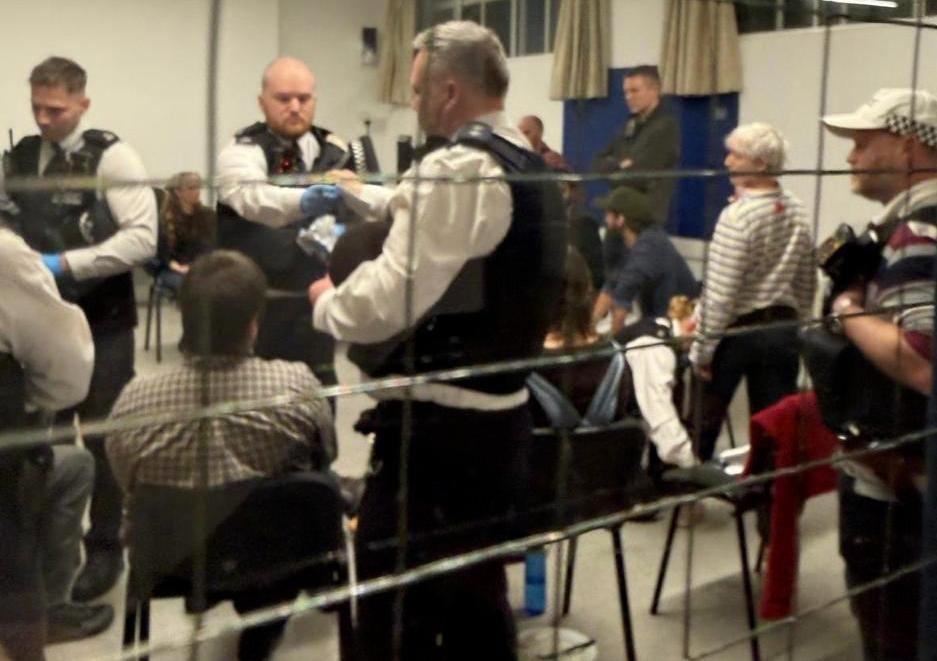
Activists from the cost-of-living campaign group Take Back Power have been arrested at the Quaker Meeting House in Westminster by police in what appears to be the latest sign Britain is sliding towards a police state where even non-violent protest training can lead to detention.
The Metropolitan Police confirmed officers carried out an operation targeting activists. Fifteen people were arrested during the operation, which police said was intended to disrupt alleged “plans for mass shoplifting” linked to protest activity.
But critics say the move raises troubling questions about the state of protest rights in modern Britain.
Who are Take Back Power?
Take Back Power describes itself as a “non-violent civil resistance group” seeking sweeping economic reform and a redistribution of wealth. Its central demand is the creation of a permanent citizens’ assembly, dubbed a “House of the People”, which organisers say would have the authority to tax extreme wealth and hold governments to account.
The campaign argues that ordinary Britons are struggling while the wealthy grow richer. As one statement from organisers put it, millions of people are “working harder than ever, yet falling further behind”.
Activists linked to the group have dumped manure in the lobby of the Ritz hotel and thrown apple crumble and custard at the Crown Jewels display at the Tower of London during a protest about inequality.
More controversially, the campaign has discussed organising so-called “take backs” in which activists remove food from supermarkets and redistribute it to local communities.
Pre-emptive arrests
Police say the arrests were aimed at stopping the “take backs” before they could happen. Deputy Assistant Commissioner James Harman said: “There is a clear difference between lawful protest and criminal acts. This evening’s operation tackled a group who we have grounds to suspect were planning to steal from shops in a large, targeted and organised way. Theft is a crime and the public expect the police to deal with it—which is exactly what we have done today”.
But critics say the operation reveals a far deeper issue. The activists involved were reportedly attending what supporters describe as training for non-violent protest. If that is the case, some argue, the question is no longer simply about supposed shoplifting but about whether peaceful dissent is being criminalised.
A Take Back Power spokesperson said: “The police arrested fifteen ordinary people in a place of worship for discussing nonviolent civil disobedience. This draconian overreach shows what the state is willing to do to protect corporate profits and billionaires, while ordinary people struggle to put food on the table”.
The criminalisation of protest
Britain has long prided itself on the right to protest. Yet in recent years that right has been steadily narrowed through tougher policing powers, new public order laws and increasingly aggressive enforcement.
Campaigners warn that the line between preventing crime and suppressing dissent is becoming dangerously blurred. After all, planning a protest is not a crime. Attending a workshop about civil resistance is not a crime. But in the modern Britain of pre-emptive arrests and sweeping public order powers, critics fear the police are acting first and asking questions later.
In the context of these arrests, a Take Back Power spokesperson said: “The state is scared of civil disobedience because it works. But when the super-rich have captured our politics, nonviolent civil disobedience is the only choice we have to take back our power. Now more than ever, we need everyone to join us”.
If people can be arrested simply for attending a meeting where non-violent protest tactics are discussed, the implications are chilling. The state may insist it is merely stopping crime before it happens. But to many observers the message is stark: in today’s Britain, even learning how to protest peacefully may be enough to bring the police knocking at the door.