


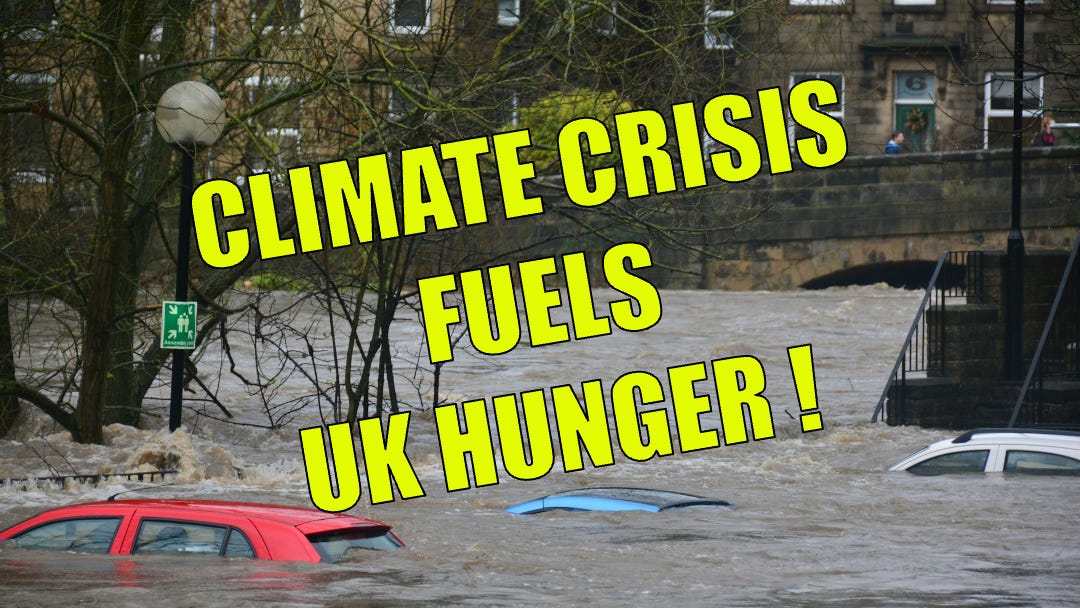
A new report from the Trussell Trust has lifted the lid on how climate change, rising costs and government policies are now fuelling hunger and forcing millions more Britons to rely on food banks—with the most vulnerable paying the price.
The report lays bare an alarming truth: Britain’s cost-of-living squeeze is not just an economic story but an environmental one too. Climate shocks like floods, heatwaves and spiralling food prices don’t just damage the countryside—they devastate low-income households already struggling to make ends meet.
Climate costs hitting households hardest
The impact of environmental change hits those on the lowest incomes hardest. Households with minimal savings—the very people who are most likely to rely on food banks—are unable to absorb even small increases to costs caused by climate disruption. Food prices are rising as a result of weather-related crop failures and global shocks, adding hundreds of pounds to annual shopping bills, while energy price volatility hits poorer families hardest.
With 90 per cent of food bank users behind on utility bills and living on extremely limited buffers, even minor cost jumps can push people past breaking point. According to the report, climate-related food price shocks and flood damage to homes and infrastructure could add as much as £3,000 a year to household costs for struggling families.
Social security system under strain
The report also highlights the failure of the UK’s social security safety net to protect people from climate-linked hardship. A staggering 87 per cent of people referred to food banks were receiving social security—yet changes in policy and benefit design mean that support is no longer enough to keep pace with rising costs and climate stressors.
Experts warn that without urgent reform, the double whammy of climate change and inadequate welfare will only deepen dependency on emergency food aid. Opportunities exist to link climate action with job creation and better support systems, but the review says such options have not been harnessed.
Care, mental health and community breakdown
Beyond money, the report paints a bleak picture of how environmental pressures intersect with social issues. Around half of food bank users experience mental health issues—much higher than the general population—and extreme weather events like heatwaves and flooding are linked to spikes in anxiety, depression and trauma.
Meanwhile, carers—many of them women—are struggling to juggle rising childcare and care costs with low wages and insecure work, a problem made worse by poor transport infrastructure and rising fuel prices.
The report also highlights that social isolation is rampant among food bank users, with nearly a third reporting minimal or no contact with family and friends. Poor public transport, digital exclusion and lack of community spaces are making it harder for people to build the resilience they need in times of crisis.
A call for action
Britain stands at a crossroads, the report says: without a national plan that tackles climate change and poverty together, food bank use will continue to rise and the cost of hunger—both social and economic—will balloon and we will never build Our Fair Future.