


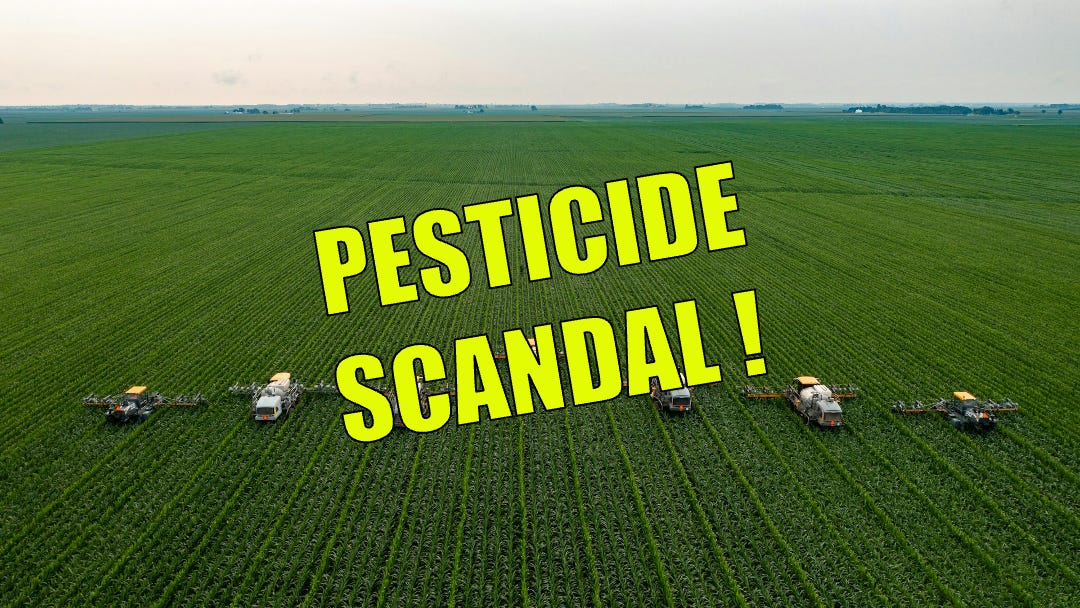
Britain’s farms are awash with pesticides that Brussels banned years ago because they’re linked to cancer, infertility and environmental devastation—and now powerful agrochemical lobbyists are desperately trying to STOP ministers from cleaning up the mess.
An explosive Unearthed investigation has revealed that a clutch of toxic chemicals outlawed across the European Union continue to be used widely on British fruit, vegetables and cereals, despite the supposed protections that were meant to follow Brexit.
Campaigners slam government ‘toxic loophole’
According to the investigation, at least 14 pesticides that are no longer legal on EU farms are still being sprayed across British fields. That includes dimethomorph, a fungicide used on strawberries, raspberries and onions that European regulators say can harm human fertility, but which remains authorised here. Benthiavalicarb, applied to potatoes, was banned in the EU after being proposed as a possible carcinogen, yet British growers can still buy and use it.
Environmental campaigners have reacted with fury. “Since leaving the EU’s regulatory system, the UK’s pesticide standards have fallen sharply behind, putting public health and wildlife at risk”, warned one conservation expert, “No one voted for Brexit because they wanted more toxic chemicals in their food and fields”.
The politics of poison
At the heart of the controversy is CropLife UK, the agrochemical industry lobby group which is openly pressuring ministers to delay a rapid ban on these hazardous substances. Under a proposed new deal to streamline Britain’s farming rules with Europe’s—the so-called sanitary and phytosanitary (SPS) agreement—the remaining EU-banned pesticides could be prohibited here as early as next year.
CropLife warns that switching overnight could devastate British growers and slash yields, costing agriculture up to £810million in a single year. But campaigners say that argument amounts to a corporate cover-up of public health risks.
Meanwhile, farmers’ unions are reported to be lobbying Westminster too, urging a lengthy transition period so that British growers aren’t left without tools they argue they still need to keep crops healthy. Critics say this simply prioritises short-term profits over long-term sustainability.
Environmental and trade implications
Experts warn that the controversy could also affect Britain’s place in global markets. As the UK seeks to rebuild trade ties with the EU and other partners, sticking with weaker pesticide standards could make British produce harder to sell overseas and raise concerns about food safety.
What’s more, campaigners say this isn’t just a farming story—it’s a public health story. Some of the banned substances have been linked to serious issues like groundwater contamination and endocrine disruption, which can affect hormone systems in humans and wildlife alike.
At a time when Westminster likes to boast about “global Britain” and higher food standards, critics say this scandal reveals a troubling reality: toxic pesticides banned on the Continent are still spraying over British soil—and powerful interests are desperately trying to keep it that way to continue turning a polluting profit.